Comoros and Madagascar Restore Direct Flights After Four-Year Freeze, Reopening Indian Ocean Corrido

A long-awaited breakthrough is unfolding in the Indian Ocean’s aviation landscape, and it carries meaningful implications for tourism, trade, and family reunification across the region. Direct flights between the Union of the Comoros and Madagascar are set to resume this July, ending roughly four years of interruption on one of the region’s most sensitive air corridors. The announcement was confirmed by Comorian President Azali Assoumani during ceremonies marking the country’s 51st independence anniversary, signalling a decisive turn in a bilateral relationship that had grown strained since the suspension.
The story behind the freeze is as fascinating as the resumption itself. Direct services between Moroni and Antananarivo were halted in the wake of a diplomatic dispute triggered by the seizure of a significant quantity of gold in the Comoros, an incident that ultimately saw the precious cargo returned to Madagascar but nonetheless left a lasting chill between the two nations. Compounding the timeline, the earlier withdrawal of the regional operator Int’Air Îles from the corridor as far back as 2020 meant that in practical terms, some travellers had already been enduring the inconvenience for close to five years. Families, businesses, and cultural communities on both sides have paid the price in longer, more expensive routings via Nairobi, Addis Ababa, or Réunion.
The return of a direct link was formally announced in Antananarivo by Madagascar’s Minister of Transport and Meteorology, Herizo Ramanambola Andrianavalona, who addressed the National Assembly on 3 July and confirmed that the reopening of the Madagascar–Comoros corridor would take place this month. The commitment reflects broader diplomatic momentum. Both governments have signed fresh cooperation agreements aimed at deepening bilateral relations, and the aviation link has emerged as one of the most visible symbols of that renewed goodwill.
Interestingly, the two national carriers involved are approaching the reopening at different speeds. The Comorian airline Royal Air has already announced its intention to serve Antananarivo, positioning itself as the first mover in re-establishing the route. On the other side, Madagascar Airlines has yet to formally confirm the date of its own return to Moroni, though the political direction from the ministerial level suggests that a schedule is imminent. For African travel trade professionals, this staggered rollout is worth monitoring closely, since early operators often capture the strongest market share when routes reopen after long suspensions.
The commercial and human dimensions of the resumption cannot be overstated. Both countries share deep cultural, familial, and historical ties, forged over centuries of trade, migration, and shared Indian Ocean heritage. Comorian communities have long maintained a presence in Madagascar, particularly in the country’s coastal cities, while Malagasy influence in the Comoros has also endured across generations. The absence of direct flights forced travellers into costly and time-consuming routings, disrupting family visits, small trader activity, medical evacuations, and educational exchanges. The restoration of nonstop service promises to breathe fresh life into all of these flows.
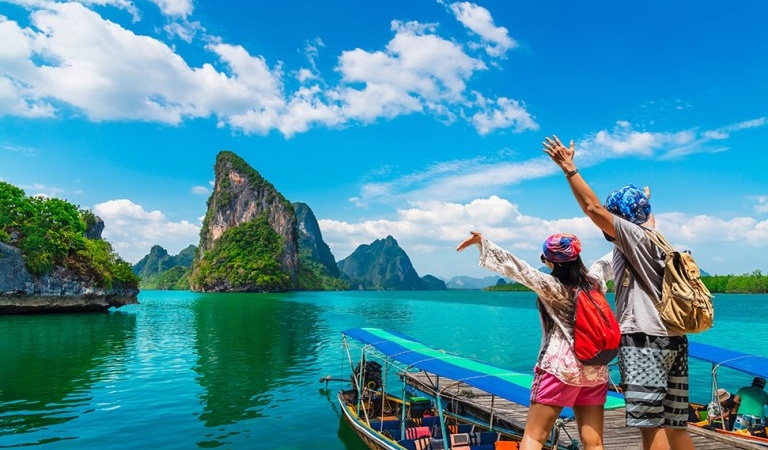
From a tourism perspective, the reopening carries genuine strategic value. Madagascar’s celebrated biodiversity, from the lemur-rich forests of Andasibe to the sandstone spires of Isalo and the beach paradises of Nosy Be, has always drawn adventurous travellers. The Comoros, meanwhile, remains one of the Indian Ocean’s most under-marketed destinations, offering volcanic landscapes, marine biodiversity, and authentic Swahili-Arab cultural experiences. Combining the two countries in twin-destination itineraries has been all but impossible during the flight suspension. With direct connectivity restored, tour operators and destination management companies can now begin designing Indian Ocean island-hopping packages that pair Malagasy nature tourism with Comorian cultural depth.
The reopening also aligns with wider Indian Ocean aviation momentum. Ethiopian Airlines has recently launched services to Mauritius, Airlink has announced a new Cape Town–Mauritius corridor, and Kenya Airways is aggressively expanding its regional network. Against this backdrop, the Comoros–Madagascar link fills a critical missing piece in the archipelagic connectivity puzzle, giving travellers, freight forwarders, and diplomatic officials the ability to move more freely across the western Indian Ocean.
For African travel trade professionals, several practical opportunities emerge. Tour operators specialising in the Indian Ocean can now build fresh multi-country itineraries that combine Madagascar, the Comoros, and potentially Mauritius or the Seychelles into premium leisure packages. Diaspora-focused agencies serving Comorian and Malagasy communities across Africa, Europe, and the Gulf gain a valuable new product to sell, particularly for family visits, weddings, and cultural events. Business travel specialists should also take note, as bilateral cooperation agreements typically generate trade delegation traffic, ministerial visits, and cross-border investment activity that translate into corporate travel demand.
The wider takeaway for the African travel industry is a familiar but powerful one. Aviation connectivity remains a decisive enabler of tourism, trade, and human relationships. When political friction interrupts a route, entire communities suffer, and when diplomacy succeeds in restoring flights, the benefits ripple far beyond the aircraft itself. As the Comoros and Madagascar rebuild their aerial bridge this July, African travel professionals should watch closely, prepare their product offerings, and position themselves early to serve the pent-up demand that four years of silence has quietly created.
Originally Published at travelnews.africa