Namibia and Mozambique Among World’s Top Gainers in Global Connectedness Rankings

The DHL Global Connectedness Report 2026, released in partnership with New York University’s Stern School of Business, reveals that globalisation remains at historically high levels despite escalating geopolitical tensions and trade policy uncertainties. For African travel professionals, the findings offer compelling evidence that the continent is steadily strengthening its position within international trade, investment, and tourism networks.
Drawing on more than nine million data points tracking cross-border flows of trade, capital, information, and people, the report presents the most comprehensive analysis of global connectedness currently available. The worldwide level of globalisation stood at 25 percent in 2025, matching the record high first established in 2022. This measurement scale ranges from zero percent, indicating no cross-border flows, to one hundred percent, where borders and distance have no impact on international exchange.
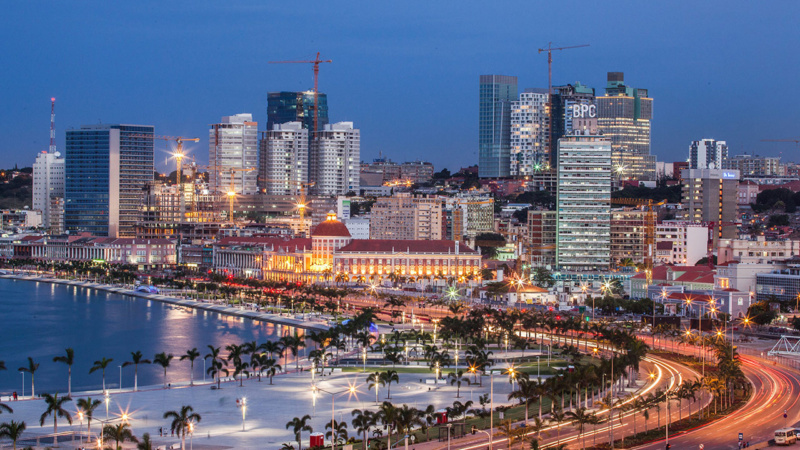
Sub-Saharan Africa emerges as a region of notable progress within the report’s findings. Namibia ranks among the top three countries globally for long-term increases in connectedness since 2001, while Mozambique also features prominently among the strongest long-run improvers. More recently, Nigeria and Zambia recorded substantial connectedness gains since 2022, reflecting growing momentum in trade, investment, and the movement of people across borders.
The country rankings for 2024 position several African nations favourably among the 180 economies assessed. Seychelles placed 40th overall, followed by South Africa at 53rd, Mauritius at 65th, and Namibia at 68th. Ghana, Nigeria, Mozambique, and Kenya also registered within the rankings, demonstrating varied but meaningful levels of global integration across the region.
For the African travel trade, the report’s findings on people flows carry particular significance. International tourism has fully recovered from the pandemic-era collapse, with Africa recording a 17 percent increase in international arrivals in 2025 compared with 2019 figures. This represents the second-largest regional increase worldwide, surpassed only by the Middle East. Such growth underscores the continent’s expanding appeal as a destination and highlights opportunities for travel businesses positioned to capitalise on rising visitor numbers.
Hennie Heymans, Chief Executive of DHL Express Sub-Saharan Africa, emphasised that connectedness is becoming a key differentiator for businesses and nations competing in global markets. Countries strengthening their international links are gaining visibility within trade networks, creating scope for increased commerce and partnership opportunities. Heymans noted that Africa is increasingly shifting from a narrative centred on aid to one defined by trade, driven by stronger integration, rising competitiveness, and improved access to global markets.
The report also addresses concerns about potential fragmentation of the global economy into rival trading blocs. Despite ongoing decoupling between the United States and China, most countries continue engaging with their established partners. Over the past decade, only a small fraction of global goods trade and investment shifted away from geopolitical rivals, with much of that movement flowing to countries maintaining flexible positions, such as India and Vietnam. The world economy remains far from splitting into opposing camps.
Professor Steven Altman, Director of the DHL Initiative on Globalisation at NYU Stern, observed that while politics and policy surrounding globalisation have become increasingly volatile, actual cross-border flows demonstrate considerable resilience. Global trade patterns changed more in 2025 than in a typical year, yet less dramatically than during other recent disruptions.
For African travel industry stakeholders, these findings reinforce the importance of building robust international connections and maintaining readiness for evolving market conditions. The continent’s improving connectedness rankings suggest that businesses investing in global relationships today are positioning themselves advantageously for the opportunities that continued integration will bring. As tourism arrivals grow and trade links strengthen, the African travel sector stands to benefit substantially from this ongoing transformation.
Originally Published at travelnews.africa