South Africa Breaks Into World’s Top 10 Food Destinations for 2026
A new accolade has handed the continent’s travel trade something genuinely sellable. South Africa has been named the tenth-best country for food in the world in the 2026 Condé Nast Traveller Readers’ Choice Awards, marking the first time the destination has entered this particular top ten and placing it in company usually reserved for Mediterranean and Asian heavyweights.
The country recorded a score of 94.26 per cent, finishing just behind Croatia on 94.39 per cent. Italy claimed the top position with 96.92 per cent, followed by Greece on 96.72 per cent and Portugal on 96.57 per cent, with Japan, Türkiye, Indonesia, Spain and Thailand filling the remaining places. Because the ranking is built entirely from reader votes rather than expert panels, it carries a particular kind of weight for the trade: it reflects what actual travellers experienced and remembered, which is precisely the currency agents work with when converting enquiries into bookings.
What the judges’ commentary highlighted was diversity rather than any single signature dish. South African cooking draws on indigenous traditions alongside Indian, Malay and European influences, producing a food culture that shifts noticeably from one province to the next. That regional variation is the commercial opportunity, because it allows a single country itinerary to deliver several distinct culinary identities without long-haul connections between them.
In Cape Town and the broader Western Cape, Cape Malay cooking anchors the offering, with bobotie and aromatic curries sitting alongside an exceptional coastal seafood supply and a contemporary restaurant scene that has drawn repeated international recognition. The Cape Winelands around Stellenbosch, Franschhoek and Paarl extend this naturally, pairing estate visits with structured tasting experiences that convert well into premium packages and have become reliable revenue generators for operators selling into Europe and North America.
Durban tells a different story. The city’s Indian heritage has produced its own distinct repertoire, headlined by bunny chow, a hollowed loaf filled with curry that has become one of the country’s most recognisable street dishes. Inland, Johannesburg and Pretoria offer breadth rather than a single tradition, with kitchens serving both classic South African plates and modern reinterpretations built on local ingredients.
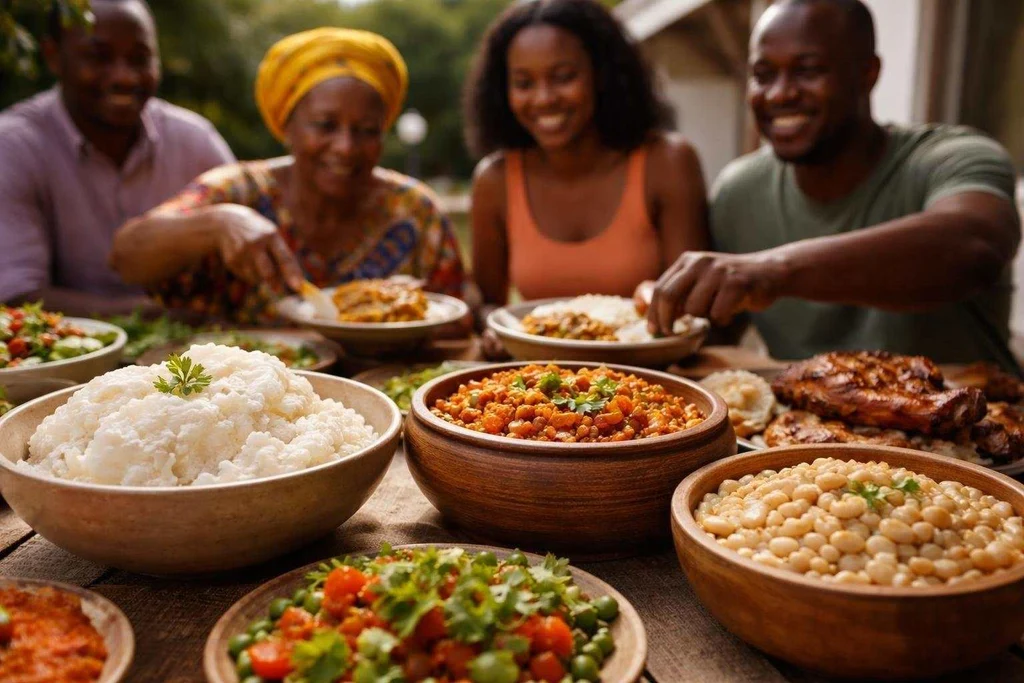
Then there is the braai, which functions less as a meal than as a social institution. Grilled meats, boerewors and an accompanying spread of sides form the centre of a gathering, and for visitors it often becomes the most genuinely memorable food moment of a trip precisely because it cannot be replicated in a restaurant setting.
For African travel professionals, the timing of this recognition matters. Culinary tourism has become one of the fastest-growing motivators in global leisure travel, and it carries characteristics the trade should welcome: it spreads spending across seasons, it draws visitors into secondary towns and rural areas that wildlife circuits bypass, and it appeals strongly to repeat travellers who have already completed a standard safari and want a reason to return.
The practical implication is that South Africa can now be positioned credibly as a food destination in its own right rather than as a safari product with meals attached. Market stalls, township kitchens, wine estate lunches, cooking demonstrations and coastal seafood trails all become legitimate itinerary anchors. Operators able to build and price these elements properly will find themselves selling into a segment with higher margins and considerably less seasonal volatility than traditional game viewing.
The wider lesson extends well beyond one country. If reader voting can lift South Africa into a list dominated by established gastronomic powers, the same mechanism can work for Morocco, Ethiopia, Nigeria, Senegal and others whose food cultures remain under-marketed internationally. The coming years will likely reward African destinations that treat cuisine as deliberate tourism infrastructure rather than incidental hospitality.
Originally Published at travelnews.africa