Zambia to Host AviaDev Africa 2027 as Airlift Zambia Initiative Targets Bold New Route Map

Zambia has been confirmed as the host country for AviaDev Africa 2027, the continent’s only dedicated air service development conference, in a landmark announcement that places the Southern African nation firmly at the centre of Africa’s evolving aviation conversation. The decision, made in partnership with Zambia Airports Corporation Limited (ZACL) as the official host partner, coincides with the launch of an ambitious new Airlift Zambia Initiative, a comprehensive strategy designed to reposition the country as one of Southern Africa’s most important regional connectivity hubs.
For African travel professionals, the announcement carries significant weight. AviaDev Africa has become the continent’s most focused forum for route development, air service negotiation and connectivity strategy, drawing together airlines, airports, tourism authorities, government officials and aviation service providers in a single, results-oriented setting. Previous editions in Windhoek, Zanzibar and Botswana have repeatedly demonstrated how concentrated dialogue can translate into tangible new air services, and Zambia’s selection as the 2027 host underlines its rising profile as one of Southern Africa’s most dynamic aviation markets.
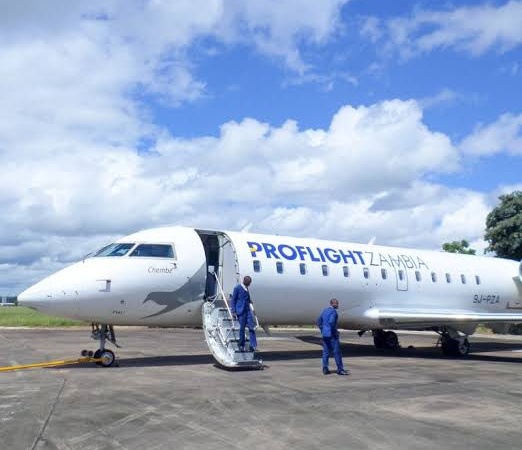
The Airlift Zambia Initiative sits at the heart of the country’s ambitions. The strategy is designed to close critical connectivity gaps, attract new international carriers and unlock direct long-haul routes to Europe, the Gulf, Asia and North America. Importantly, the groundwork has already been laid. Qatar Airways, Uganda Airlines, Fastjet Zimbabwe and, most recently, Eswatini Air have all commenced operations into Zambia, while Proflight Zambia has expanded its regional reach with new services linking Lusaka and Livingstone with Windhoek and Gaborone. These cross-border connections are opening fresh tourism and trade corridors that travel sellers across the region can now actively build into their itineraries.
ZACL’s four international gateways will each play a distinctive role in the strategy. Kenneth Kaunda International Airport in Lusaka anchors business and political traffic, while Harry Mwaanga Nkumbula International Airport in Livingstone serves as the gateway to the iconic Victoria Falls. Simon Mwansa Kapwepwe International Airport in Ndola caters to the Copperbelt’s commercial energy, and Mfuwe Airport provides access to the legendary South Luangwa National Park. The decentralised approach is designed to spread tourism benefits beyond the capital while positioning Livingstone and Mfuwe as critical wildlife and adventure tourism access points.
Zambia’s aviation aspirations are inseparable from its remarkable tourism trajectory. International arrivals have surged from approximately 1.1 million in 2022 to 2.3 million in 2025, more than doubling in just three years. The government is now targeting between 2.5 and 3 million international arrivals in 2026, with a longer-term ambition of building a USD 1 billion tourism industry by 2031. To support this drive, Zambia has committed roughly USD 55 million to the tourism sector in 2026, funding infrastructure development, wildlife conservation, destination marketing and the opening of remote tourism sites.
Tourism already accounts for seven percent of national GDP, employing 473,000 people, with that figure projected to climb to 613,000 by 2034 if current growth targets hold. Priority source markets being courted include Germany, the United Kingdom, North America, South Africa, India, China and the Gulf states. For African travel agents and tour operators, this represents an opportunity to position Zambia as a fresh, less-crowded alternative to traditional safari destinations, with an authentic conservation-led narrative that resonates strongly with today’s discerning travellers.
Urvesh Desai, Managing Director of ZACL, captured the moment with characteristic clarity, noting that Zambia has the infrastructure, the ambition and the government support, and that what is needed now is for the world’s airlines to see for themselves why the country deserves a place on their network maps. He emphasised Zambia’s strategic location, with most Southern African neighbours within a two-hour flight, making the country a natural connectivity node for the region.
Jon Howell, CEO and Founder of AviaDev Africa, echoed the optimism, describing Zambia as exactly the kind of destination the conference exists to serve and celebrate. He pointed to the country’s extraordinary visitor growth alongside its current under-connectivity by air as precisely the kind of opportunity AviaDev delegates are positioned to unlock.
Beyond the natural drama of Victoria Falls, South Luangwa, Kafue and Lower Zambezi National Parks, Zambia offers political stability, an Open Skies policy, progressive visa liberalisation and a macroeconomic reform agenda that has caught the attention of international airline planners. For African travel professionals, the message from Lusaka is unmistakable. Zambia is no longer content to sit on the margins of the continent’s aviation story, and AviaDev Africa 2027 looks set to become the stage on which a bold new chapter of Southern African connectivity will be written.
Originally published at travelnews.africa