Air Peace Issues Public Apology After Power Surge Triggers Nigeria-Wide Flight Disruptions
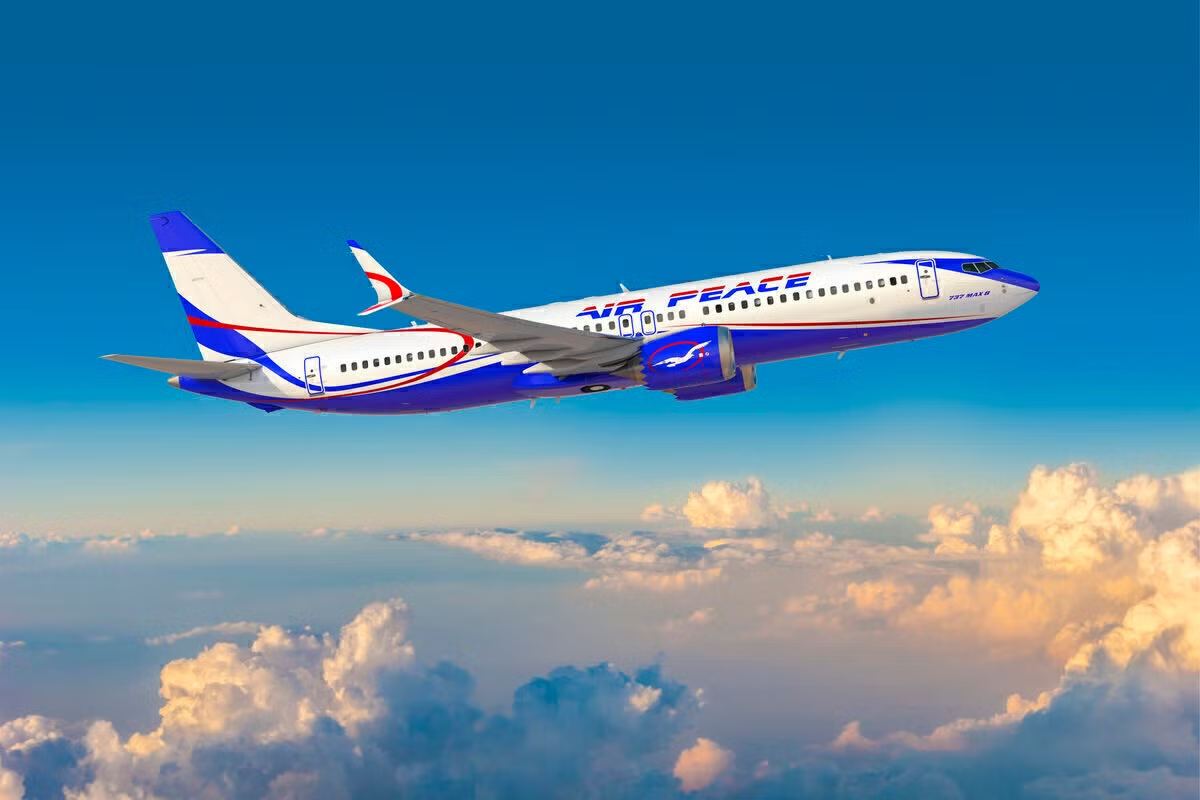
Nigeria’s largest privately owned carrier, Air Peace, has issued a formal apology to its passengers following a wave of flight disruptions that affected operations across its network on Monday, June 29, 2026. The airline has attributed the chaos to a power surge that damaged a critical IT infrastructure server responsible for supporting crew scheduling and flight planning functions — two of the most sensitive operational systems within any modern airline environment.
For travel sector professionals across sub-Saharan Africa, the incident serves as a timely reminder of how deeply dependent today’s aviation industry has become on digital infrastructure. Even a momentary technical fault in backend systems can ripple outward into hours of delays, cancelled rotations and significant passenger inconvenience. In Air Peace’s case, the disruption affected scheduling continuity across multiple routes, leaving travellers stranded at key Nigerian airports and prompting growing concern among trade partners who rely on the carrier for both domestic and regional connectivity.
The carrier moved quickly to communicate with passengers and the broader public, expressing regret for the inconvenience caused and confirming that technical teams had been deployed to restore the affected server and stabilise its scheduling environment. The airline also assured customers that flight planning protocols were being manually managed during the recovery phase to limit further knock-on effects across the network. This rapid acknowledgement is consistent with the airline’s communication approach in earlier operational challenges, where transparent updates have helped to maintain passenger trust during turbulent periods.
It is worth noting that Air Peace has navigated a particularly complex operating environment in recent months. Earlier in the year, the airline contended with jet fuel supply inconsistencies that affected smaller regional airports, with deliveries to secondary cities proving less reliable than those to Lagos, Abuja and Port Harcourt. The Nigeria Civil Aviation Authority has previously summoned the carrier over service-related issues, and the airline has consistently been called upon to address customer experience concerns transparently. Despite these pressures, public sentiment toward Air Peace has remained largely supportive, with many passengers acknowledging that global aviation has faced widespread schedule volatility driven by fuel pricing, geopolitical tensions and supply chain issues
Beyond the immediate disruption, the airline has continued to invest heavily in expansion and operational resilience. Air Peace has been rolling out a broader African network expansion strategy aimed at strengthening intra-continental connectivity and reducing reliance on legacy European transit hubs. The carrier has also entered into a strategic partnership with Dutch Aviation Trainers (DAT) to bolster crew training and tackle pilot shortages — a structural challenge facing many rapidly expanding African carriers. These initiatives reflect a long-term commitment to building a more robust operating platform, even as short-term technical incidents like Monday’s power surge continue to test the system.
For the African travel trade, the implications of this latest disruption are worth reflecting on carefully. As more African carriers expand their fleets and route networks, investments in redundant IT systems, backup servers, cybersecurity protocols and crisis communication frameworks will become as important as fleet acquisitions. Travel sellers servicing Nigerian and West African corridors will also want to ensure that contingency plans, alternative routing options and refund procedures are well understood, particularly when working with corporate accounts and high-value leisure clients who require schedule certainty.
Air Peace remains a critical player in Nigeria’s aviation ecosystem, operating an extensive domestic network alongside regional and long-haul services to destinations including Dubai, London, Johannesburg and Mumbai. Its ability to recover quickly from this latest setback will be closely watched by industry observers, travel trade partners and competitors alike.
Looking ahead, this episode underscores a broader truth shaping African aviation in 2026: operational resilience now extends far beyond aircraft and crew — it begins at the server room. Carriers that invest in airtight digital infrastructure will be best positioned to win the loyalty of an increasingly discerning African travelling public in the years ahead.
Originally Published at travelnews.africa